This scene is from the movie "Stripes." This 1982 movie stars Bill Murray as a directionless man who joins the Army. These recruits are misfits and don't follow orders or listen to instructions. The night before graduation, they decide to work on their marching skills to show everyone what they are made of. This is the scene for their graduation from boot camp.
Tuesday, June 23, 2015
June 24
This scene is from the movie "Stripes." This 1982 movie stars Bill Murray as a directionless man who joins the Army. These recruits are misfits and don't follow orders or listen to instructions. The night before graduation, they decide to work on their marching skills to show everyone what they are made of. This is the scene for their graduation from boot camp.

Friday, June 19, 2015
June 24
 | |||||
| http://cf.mp-cdn.net/fa/dd/d06b449a6b04e01655ea3787af02-who-is-your-favorite-actor-actress.jpg |
Prepare a 3 minute presentation to introduce the class in Period 3.
Wednesday, June 17, 2015
June 18
 |
| http://www.mgoodliffe.co.uk/images/endaff.jpg |
Still images and freeze frames are both a form of tableau. With freeze-frame, the action in a play or scene is frozen, as in a photograph or video frame. Still images, on the other hand, require individuals or groups to invent body-shapes or postures, rather than freeze existing action. Groups can be asked to tell a story through a series of prepared still-images. This can be an effective method for students who are less inclined to improvise dialogue. The still images can also be brought to life through improvisation. Freeze-frames and still images can be usefully combined with Thought Tracking, Forum Theatre or Flashbacks and Flash Forwards.
Thought Tracking - A group makes a still image and individuals are invited to speak their thoughts or feelings aloud – just a few words. This can be done by tapping each person on the shoulder or holding a cardboard ‘thought-bubble’ above their head. Alternatively, thought tracking (also called thought tapping) can involve other members of the class speaking one character’s thoughts aloud for them. The technique is most often used in conjunction with image theatre or freeze-frames. Equally, thought-tracking is useful preparation for improvisation.
Today we will be practicing Freeze Frame
- You will work collaboratively and be given a photo that you will bring to life. (What dynamics can you identify in the image? What can you infer from the facial expressions, body language, etc.? What story can you build from this image?)
- You will use thought tracking and improvisation.
Tuesday, June 16, 2015
Wednesday, June 10, 2015
June 10 National Holiday, 11
 |
| http://rollingout.com/wp-content/uploads/2015/04/lipsync.jpg?769134 |
1. Peer Review continued
2. Lip Sync - choose song
June 3, 5
 |
| http://i0.wp.com/www.skepticalraptor.com/blog/wp-content/uploads/2013/10/peer_review.jpg |
2. peer evaluations
Tuesday, May 26, 2015
May 27, 28
 |
| http://www.stowe.com/wp-content/uploads/2014/05/263theater_2.jpg |
2. It's showtime. Let the performances begin . . .
Wednesday, May 20, 2015

Tuesday, May 12, 2015
May 13, 14
1. Warm-up The exaggeration circle is a good warm-up to work on taking something small and heightening it.
2. Scene practice
3. Process Journal entry
2. Scene practice
3. Process Journal entry
Wednesday, May 6, 2015
Tuesday, May 5, 2015
May 6, 7
1. Who owes me work?
2. Work in your pairs on your movie scene
3. Process Journal entry
Saturday, April 25, 2015
April 28, 29
1.
I watched this little home made video a couple of weeks ago and it gave me;)
Let's create a lip sync video for the final assembly:D
Here's the song I chose. . .
2. Today you need to complete your research.
Your document needs to include: the movie, the scene, and actors chosen. Justify the choice of scene.
Conduct thorough research about the movie, director, and actor or actress you are portraying.
How will you accomplish this? What props will you need?
Include all pertinent details to accomplish your goal.
Due today, April 30
3. Journal entry.
Wednesday, April 22, 2015
April 23
1. Warm-up video
2. Meeting - today is the day that we will decide which scenes you will perform.
Each of you must have a staring role in a performance. Your Criterion B grade will be primarily based on this performance. However, you may also have a secondary role also.
3. Entry in Process Journal - Focus on Criterion C - What do I think about the process? What do I think about the conclusions? How can I execute this?
2. Meeting - today is the day that we will decide which scenes you will perform.
Each of you must have a staring role in a performance. Your Criterion B grade will be primarily based on this performance. However, you may also have a secondary role also.
3. Entry in Process Journal - Focus on Criterion C - What do I think about the process? What do I think about the conclusions? How can I execute this?
Tuesday, April 21, 2015
Iconic Movie Clip
Gone With The Wind (1939)
1)
Warm Up - Physical warm-up
2) Now, let's continue our research:
1) Research at least three movie genres. Document your research.
2) Research three directors. Document your research
3) Research three actors/actresses. Document your research.
4) Choose a movie and a scene that you would like to perform.
5) Justify choice.
6) Produce a Works Cited page.
3) Process Journal Entry
Wednesday, April 15, 2015
April 16
Two Tickets Please!
Unit questions:
What can I learn from others?
How can examining other performances make me a better actor?
How does an effective performance engage the audience?
What makes a scene memorable?
Vocabulary: the ensemble, symbolism, imagination, theme, movement, pace, rhythm, dynamic, experimenting, developing, organising, feedback, reflecting, refining
In this unit you will recreate a scene from a movie or play. You will have a free choice of play text. You will work in a group of 2 - 6.
Criterion A - Let's begin some research:)
1) Research at least three movie genres. Document your research.
2) Research three directors. Document your research
3) Research three actors/actresses. Document your research.
4) Choose a movie and a scene that you would like to perform.
5) Justify choice.
6) Produce a Works Cited page.
This is due April 23 at the end of class.
2) Research three directors. Document your research
3) Research three actors/actresses. Document your research.
4) Choose a movie and a scene that you would like to perform.
5) Justify choice.
6) Produce a Works Cited page.
This is due April 23 at the end of class.
April 15
Year 11, Welcome to Term 3
1) Let's warm up with Party Host (a good way to get acquainted, or in our case, reacquainted.)
2) Let's write the unit of work together.
Wednesday, March 25, 2015
March 25
 |
| http://images4.fanpop.com/image/photos/15800000/Olivia-John-running-lines-for-the-pep-rally-grease-the-movie-15802229-450-293.jpg |
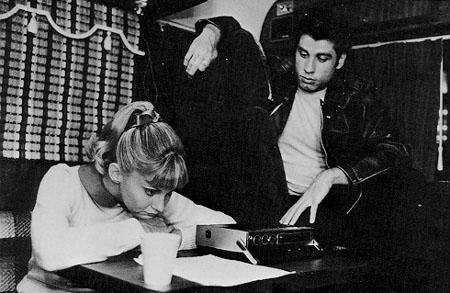
Drama Scripts
Today we will choose a script, practice it, and deliver it;)
Tuesday, March 17, 2015
March 18
 |
| http://www.runninglateshow.com/wp-content/uploads/2012/10/its_showtime.gif |
period 1
Practice
period 2
Group 2 Performance
March 12
 |
| http://www.houstonisd.org/cms/lib2/TX01001591/Centricity/Domain/14646/class-field-trip-invitations.gif |
Sunday, March 8, 2015
March 11
 | ||||
| http://brahmsandliszt.weebly.com/uploads/2/2/0/7/22076468/7109153_orig.jpg |
Year 11, it's showtime.
Wednesday, March 4, 2015
Homework - 12 Angry Men
According to Wikipedia,
"12 Angry Men is a 1957 American drama film adapted from a teleplay of the same name by Reginald Rose.[4][5] Written and co-produced by Rose himself and directed by Sidney Lumet, this trial film tells the story of a jury made up of 12 men as they deliberate the guilt or acquittal of a defendant on the basis of reasonable doubt. In the United States, a verdict in most criminal trials by jury must be unanimous. The film is notable for its almost exclusive use of one set: with the exception of the film's opening, which begins outside on the steps of the courthouse followed by the judge's final instructions to the jury before retiring, a brief final scene on the courthouse steps, and two short scenes in an adjoining washroom, the entire movie takes place in the jury room. The total time spent outside the jury room is three minutes out of the full 96 minutes of the movie.
12 Angry Men explores many techniques of consensus-building, and the difficulties encountered in the process, among a group of men whose range of personalities adds intensity and conflict. No names are used in the film: the jury members are identified by number until two of them exchange names at the very end, the defendant is referred to as "the boy", and the witnesses as "the old man" and "the lady across the street"."
For more background info: http://www.gradesaver.com/12-angry-men
Monday, March 2, 2015
March 4, 5
 |
| http://chicklitplus.com/wp-content/uploads/2013/11/a-slight-change-of-plan.jpg |
Let's redefine our work load for March. We have a lot to do, but quality is very important.
Let's see what we need to do and schedule it in. . .
March 12 Play (12 Angry Jurors),
12 Angry Jurors prep,
End of term assembly piece,
Mexican soap opera performance,
Peer assessments,
Self assessment, and
Reaction to teacher assessment.
Who is Augusto Boal? What is the Theatre of the Oppressed?
Thursday, February 26, 2015
February 26
 |
| http://nesthq-live.com.s3.amazonaws.com/wp-content/uploads/2014/03/Telll-Me-Single.jpg |
Criterion A - Write a short essay that address the following:
"What are the key features of Greek theatre and how effective are they in storytelling?"
Explain how you used these techniques when writing your script.
Monday, February 23, 2015
February 25, 26
1. Calming and centering technique . . .
2. And the winner is . . . Julianne Moore Julianne Moore's Oscar acceptance speech . . .
Julianne Moore on research that she did for the part . . .
3. Script writing and practicing
4. Process Journal entry
Tuesday, February 10, 2015
February 11, 12
Who was Bertolt Brecht? What is going on in this video? What was McCarthyism? Brief Brecht Biography
1. Warm-up - Sound Ball - keeps you spontaneous and in the moment, it's about giving and receiving ideas, letting the ideas and sounds be connected to each other, it's great for letting go of planning, letting go of editing
2. Script writing and practicing
3. Process Journal entry
1. Warm-up - Sound Ball - keeps you spontaneous and in the moment, it's about giving and receiving ideas, letting the ideas and sounds be connected to each other, it's great for letting go of planning, letting go of editing
2. Script writing and practicing
3. Process Journal entry
Tuesday, February 3, 2015
February 4, 5

1. Who is Stella Adler??? Write this question and your answer in your diary.
2. Warm up: What are you doing? is good for warming up the brain and body, and practising using the brain and body differently at the same time.
3. Statement of Artistic Intent - Due February 5 (end of class)
Write a 1 page Statement of Artistic Intent that includes the following:
What you are going to do,
Why you are going to do it,
What you want to audience to know or learn,
How you are going to do it.
* You may use the template below to help develop your ideas. You are NOT limited by this template. It is merely another tool for you to utilize.
Why are you doing this piece?
- What ideas explored throughout the unit and your individual research (including technical theatre) do you intend to further explore in developing your performance concept to a point of realization?
What message/theme do you want to convey when presenting this piece?
- What is the main message/theme you wish to communicate in your performance?
- What lasting impact do you want your performance to have on your audience?
- Why do you think it is important to communicate this message/theme to your ‘targeted’ audience?
What production elements will you use to present the piece effectively?
- How do you intend to work with the "production elements" to help communicate your ideas?
What performance elements will you include to effectively communicate your message/theme?
- How do you intend to work with the "performance elements" to help communicate your ideas?
4. Process Journal entry. Focus on criterion B and criterion C.
PS: themes from Oedipus the King: http://www.shmoop.com/oedipus-the-king/themes.html
list of literary themes: http://homeworktips.about.com/od/writingabookreport/a/themelist.htm
PS: themes from Oedipus the King: http://www.shmoop.com/oedipus-the-king/themes.html
list of literary themes: http://homeworktips.about.com/od/writingabookreport/a/themelist.htm
Tuesday, January 27, 2015
January 28, 29
1. Let's watch this: The Many Voices of Meryl Street
While this video focuses on vocal expression, I would like you to also study her body language.
When you build a character, you need to also think about physical development as well.
2. Lead With a Body Part
3. Script writing
Before you write the script for your "Mexican Soap Opera" pilot, there are a few things you need to know and do.
a. Brainstorm
b. Write a plot idea and the basics of an outline of the script. Remember that you are writing a tragedy. But what exactly is a tragedy and what should I include in my plot ideas. Click here for information that can help.
For an example of scrip writing follow this link:http://www.storiestogrowby.com/scripts/contest_body.html
c. Develop a relationship map (who's who, and how is everyone related?)
This work will help prepare you to write your Statement of Artistic Intention which will be due Friday February 5 (end of class).
4. Reflect in your Process Journal. Focus on criterion B and criterion C.
While this video focuses on vocal expression, I would like you to also study her body language.
When you build a character, you need to also think about physical development as well.
2. Lead With a Body Part
3. Script writing
Before you write the script for your "Mexican Soap Opera" pilot, there are a few things you need to know and do.
a. Brainstorm
b. Write a plot idea and the basics of an outline of the script. Remember that you are writing a tragedy. But what exactly is a tragedy and what should I include in my plot ideas. Click here for information that can help.
For an example of scrip writing follow this link:http://www.storiestogrowby.com/scripts/contest_body.html
c. Develop a relationship map (who's who, and how is everyone related?)
 |
| http://www.thefrisky.com/wp-content/uploads/2012/02/24/madmencrop_022412_m-600x450.jpg |
This work will help prepare you to write your Statement of Artistic Intention which will be due Friday February 5 (end of class).
4. Reflect in your Process Journal. Focus on criterion B and criterion C.
Wednesday, January 21, 2015
January 22
 |
| http://image.slidesharecdn.com/cfakepathancientgreektheaterarodcombo-091215212925-phpapp01/95/ancient-greek-theatre-combo-18-728.jpg?cb=1260934269 |
1. Let me show you something. This will help you with your printing problems;)
2. January 21 Process Journal entry - Focus on Criterion C
What do you "think" about Greek Theatre and how can you adapt it to modern times?
3. Let's choose our groups now.
4. Get into your group and brainstorm ideas. Create a basic outline for your soap opera. Remember that you will have to write an Statement of Artist Intention and will need to incorporate some of these ideas.
5. January 22 Process Journal entry
PS: To read Oedipus Rex online click HERE
Tuesday, January 20, 2015
January 21
1. Please submit your worksheet - no extensions
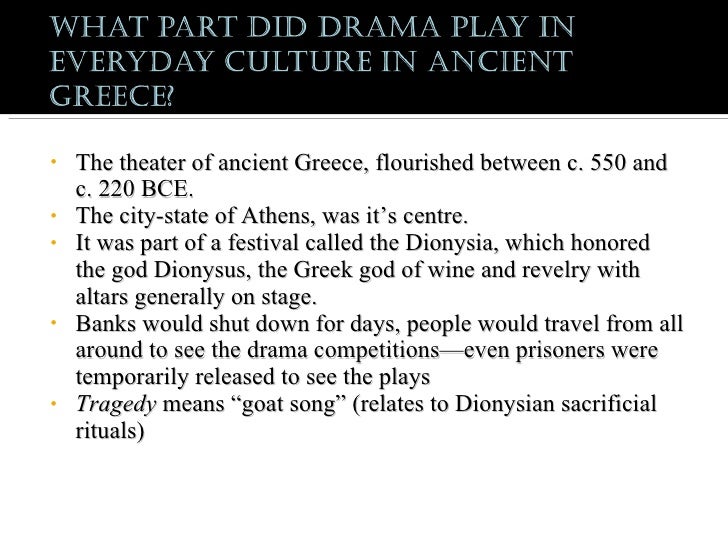
2. Greek Theatre
3. Sophocles - Oedipus Rex (the short version)
4. Let's look at an an example of a Greek Tragedy
5. Process Journal entry
2. Greek Theatre
Greek Theatre from mharring
3. Sophocles - Oedipus Rex (the short version)
4. Let's look at an an example of a Greek Tragedy
5. Process Journal entry
Wednesday, January 14, 2015
Greek Theatre Links
 |
| http://www.utexas.edu/courses/larrymyth/images/oedipus/4-Oedipus-Sphinx.jpg |
Here are some Greek Theatre links: these links are NOT in any particular order. . .
Good link for modern examples (question #7) - http://tvtropes.org/pmwiki/pmwiki.php/Main/GreekChorus
Ancient Greece (basic info) - http://www.ancientgreece.com/s/Theatre/
Ancient Greek Theatre (lecture notes) (good basic resource) - http://www.gertzresslerhigh.org/apps/download/qC5zSiCqHl296UywyYB0dl5gmvrwXwnJCS2QJM40hRuys94p.pdf/GREEK%20Handout.pdf
Slideshow - http://www.slideshare.net/anagrahernandez/greek-theatre-15831361?next_slideshow=1
Spotlight (magazine) - https://www.theatrefolk.com/spotlights/the-greek-theatre
Facts about Greek Theatre - http://ancienthistory.about.com/od/greekliterature/a/GreekTheater_2.htm
City Dionysia (background info -interactive site) - http://artsedge.kennedy-center.org/interactives/greece/theater/index.html
Greek
theatre terms: http://www.bisd303.org/cms/lib3/WA01001636/Centricity/Domain/593/10th%20english%20Fall/C%20-%20The%20Tragic%20Play/Antigone.Medea/Greek%20Theater%20Terms.pdf
Greek Drama: Tragedy and Comedy course guide - http://www.istianjinelearning.org/christineakov/files/2014/08/Greek-Drama-Comedy-and-Tragedy-Course-Guide-2bzjfli.pdf
Tuesday, January 13, 2015
January 14, 15
 |
| http://image.slidesharecdn.com/greek-theatre-1204632193617338-5/95/greek-theatre-29-728.jpg?cb=1204624994 |
Good Morning Year 11,
1. Take 2 minutes (and I'm counting) to find a definition for the word "catharsis". Use your own words to explain the meaning.
2. Warm up - Vocal Warm-up #4 Articulation from the National Theatre
3. Continue research (due tomorow January 15)
4. Process Journal entry
Wednesday, January 7, 2015
January 8
 |
| http://ecx.images-amazon.com/images/I/61%2BfK4T9z7L.jpg |
1. Take 2 minutes (and I'm counting) to find a definition for the word "pathos". Use your own words to explain the meaning.
2. Discuss "assembly" idea. Compile a list of topics to be voted upon.
3. Continue research (due January 15)
4. Process Journal entry
Homework: Pop Quiz!
http://www.wwnorton.com/college/english/nadrama/content/review/shorthistory/antiquity-18c/greek.aspx
Cool link that provides lots of information and an online quiz;)
Thursday, January 1, 2015
January 7
 |
| http://images.sodahead.com/blogs/000298931/greek_tragedy_L_3_C_xlarge.jpeg |
Welcome back, Year 11.
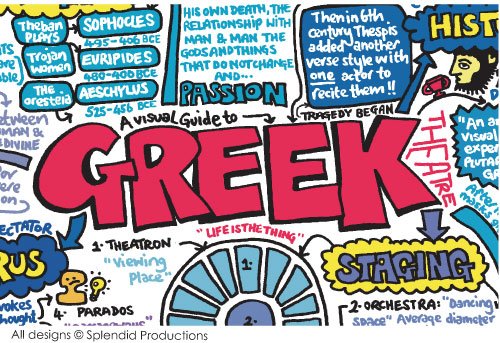
1) Introduction to our unit on Greek Tragedy!
2) Warm-up
Post by Theatre Studies Online at Rose Bruford College.
3) Begin Worksheet 1. Historical Context (Criterion A – Knowing and Understanding – strand i. and ii.)
- Research Greek Theatre and locate the following information. You may respond in short answer form but explain, be thorough, include details. Remember to include the question.
- You need a Works Cited page.
1. What were the influences that led to the
development of Greek Theatre?
2. What was the main purpose of Greek Theatre?
3. What were the techniques or conventions used
by Greek Theatre and for what purpose?
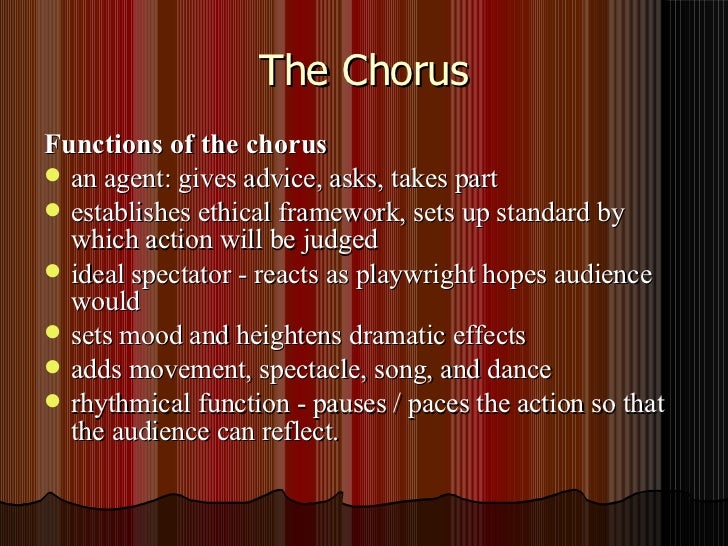
4. What is the role of the chorus in Greek
Theatre?
5. Who are the 3 most influential Greek
playwrights? What important plays did each produce?
6. Why is Greek Theatre so significant to Western
Drama and how has it continued to influence modern works?
7. What are some modern examples of the Greek
chorus?
Friday, December 12, 2014

Tuesday, December 9, 2014
December 10
Year 11, the term is almost finished. Assessments are done. Now is the time to get even more creative.
1. But first let's reflect on our unit of work. Please answer the following and submit:
What did you learn about the concept of realism in drama?
How did your confidence develop?
How did your drama skills develop?
What did you like about this unit?
What didn't you like about this unit?
What did we spend too much time on?
What didn't we spend enough time on?
How can the teacher improve learning in our classroom?
2. Today, let's explore emotions. We will practice and deliver monologues twice using two different emotions.
3. Prunella Scales and Timothy West are well-known in the UK. They worked with a drama class in a local school and this is what transpired . . .
Who is Prunella Scales? Click here and here.
Tuesday, December 2, 2014
December 3
 |
| http://schoolofdata.org/files/2014/11/feedback.jpg |
1. Organize your feedback (peer, self and teacher) and response to it. I will come around and give you a grade for Criterion D;)
Monday, November 24, 2014
November 26, 27

Year 11, we only have a few more tasks for our unit on Stanislavski and method acting.
Let's look at what you need to do to produce a high quality essay.
The key elements you need to include are:
- Background information on method acting (who created it and why)
- How method acting developed
- Answer the question, "Does an actor need to have experienced an emotion in order to act it?" (This is your opinion. You need to support your opinion. Give examples, include details.)
- How did you employ these techniques to create your character, write and perform your monologue.
Wednesday, November 19, 2014
November 19, 20
 |
| http://e-tradeandshops.lt/image/cache/data/ads/325/logo_616f7dd8d2a5093357848a729e8d8548-180x180.png |
2. Begin performances
3. Reflection in Process Journal
Peer Evaluation Teams
Diogo, Beatriz, Bernardo
Alica, Lourenço, Harsh
Inês, Sebastian, Duarte
Shafa, Francisca, Lourenco SS
Wednesday, November 12, 2014
November 12, 13
 |
| https://blogger.googleusercontent.com/img/b/R29vZ2xl/AVvXsEhmXghQOcSr-yuLz36xKy3VLayIRM3jBS3keTcmDIgic4Gzj0golLgJwunhRROhwSaBERQeHtkkw-L4bGAJL88ie1Vm-80_joX2LN30c3i_6pmt5E-jiF2-RKWDDp2Yh5zrWF3y3pT7Pn_Q/s1600/its_showtime.gif |
Year 11, It's showtime.
1. organize ourselves in groups of 3 for peer evaluation purposes.
2. look at an exercise that can help us relax and stay centered before performing:
3. Begin performances
4. Reflection in Process Journal
Peer Evaluation Teams
Diogo, Beatriz, Bernardo
Alica, Lourenço, Harsh
Inês, Sebastian, Duarte
Shafa, Francisca, Lourenco SS
Wednesday, November 5, 2014
November 7
1. Let's evaluate this as a monologue.
2. How do you memorize lines?
Check out this link for more on how to memorize your lines.
https://www.youtube.com/watch?v=FzLcYhZQbfU
3. Monologue writing/memorizing
4. Reflection. (What did you do today? What did you learn? How will this help you become a better actor?)
Monday, November 3, 2014
November 5, 7
 |
| http://www.motivateplay.com/wp-content/uploads/2013/04/motivation.jpg |
Stanislavski talks about motivation. Remember that this is what moves your character.
For your monologue you will create and develop a character. Then you will put it all into context. Create a basic story line in which your character would be delivering this monologue. Keeping this in mind will help you stay focused on what you want the character to say and why they are saying it;)
1. Warm-up - crying on command
Terry Kiser
How to cry - An actor's guide to crying:
2. Work on your monologue - Performance date November 12
3. Write a reflection at the end of class. (What did you learn today? How did it affect you? How will you use this information? etc.)
Friday, October 24, 2014
October 24

Year 11, Have a restful half-term.
I have added a page to our blog entitled "Statement of Intent." Click on the tab at the top of the page.
On this page you will find a "real-life" example of a Statement of Intent written for a music class.
I have also included a template for you to use as a tool to help you write your Statement of Intent if you need it. You are not limited to the template. Use your own thoughts to develop your work. Use method acting techniques vocabulary (affective memory, magic if, etc).
Your Statement of Intent should be approximately 1 A4 page (400-450 words).
Statement of Intent due date: November 5
If you would like feedback during the holiday my email address is:
ramona.dietrich@oeirasinternationalschool.com
Thursday, October 16, 2014
October 22, 23
Year 11, we are almost half-way through Term 1.
We have an amazing opportunity to learn more about "being in the moment" and making time count. We also have the possibility of creating a classroom full of respect and FUN!
Let's stay focused and do the best job we can.
1. Warm up.
This is a common method of Advancing scenes: accept everything said and/or done and do something with it. Also used as a verb: Yes-anding.
2. Statement of intention - Criterion C. You should work on this document this document in class today and tomorrow. My advise is to finish it before the mid-term break. Due November 5 at the beginning of class.
Remember, this is a formal document that is submitted before you write your monologue. It should include, but is not limited to: monologue topic, and techniques you will use. It should answer the questions who, what, why, when, how. The Statement of Intention will help guide the writing process.
3. Monologue Presentations - November 12
4. Reflections
1. Warm up.
This is a common method of Advancing scenes: accept everything said and/or done and do something with it. Also used as a verb: Yes-anding.
2. Statement of intention - Criterion C. You should work on this document this document in class today and tomorrow. My advise is to finish it before the mid-term break. Due November 5 at the beginning of class.
Remember, this is a formal document that is submitted before you write your monologue. It should include, but is not limited to: monologue topic, and techniques you will use. It should answer the questions who, what, why, when, how. The Statement of Intention will help guide the writing process.
3. Monologue Presentations - November 12
4. Reflections
Tuesday, October 14, 2014
October 15, 16
Good Morning, Year 11
1. Warm up - repetition exercise
Sanford Meisner - the master of teaching "how to be present in the moment". . .
As you have learned, there are many ways to deliver a phrase and there are many ways to respond. In the repetition exercise you say something truthful about the situation. Let's take the phrase, "I feel a little uncomfortable right now."
Now, it's your turn. Let's practice this technique.
2. What is sense memory? Let's discuss this . . .
3. Monologue - Now it's time to start writing our own monologue.
How to create a monologue: http://jakubowski.hubpages.com/hub/How-To-Create-A-Monologue-Easy-And-Simple
Character worksheet: http://ois-drama11.blogspot.pt/p/character-worksheet-to-develop.html
Monologues for teens: http://freedrama.net/small1t.html
4. Write a reflection at the end of class. (What did you learn today? How did it affect you? How will you use this information? etc.)
We lost a lot of time on Wednesday due to Class photos.
We lost an opportunity to perform on Thursday . . .
Thursday, October 9, 2014
October 9
 |
| http://upload.wikimedia.org/wikipedia/en/3/3e/CatsMusicalLogo.jpg |
Year 11, let's go!
Meow!
Wednesday, October 8, 2014
October 8
 |
| http://thumbs.gograph.com/gg57727410.jpg |
Good morning Year 11.
So sorry that I cannot be with you today but I am ill.
Please choose a dramatic film to watch. Make sure that at least one of the actors/actresses is a method actor.
Please show respect to your cover teachers.
Remember that tomorrow we are going to watch a dress rehearsal of "Cats".
Have a good day and hope to see you tomorrow.
Wednesday, October 1, 2014
October 2
1. Act and react
Goal of acting in modern times: Be truthful in imaginary circumstances.
2. While we're at it . . .
2. While we're at it . . .
Notes from video:
7 Universal emotions: joy, grief, fear, anger, surprise, love, laughter (people display these emotions in a similar way)
3. Continue Stanislavski worksheet (Due October 8 at the beginning of class)
4. Write a refection at the end of class. (What did you learn today? How did it affect you? How will you use this information? etc.)
Tuesday, September 30, 2014
October 1
1. Warm up activity.
2. What do you want to accomplish this term? How will you achieve your goal? Be specific. Write this in your process journal.
3.What is method acting?
Complete Stanislavski worksheet.
https://app.box.com/s/rievogls5fbiztuws91z (Due beginning of class October 8)
4. Reflection: Write a refection at the end of class. (What did you learn today? How did it affect you? How will you use this information? etc.)
2. What do you want to accomplish this term? How will you achieve your goal? Be specific. Write this in your process journal.
3.What is method acting?
Complete Stanislavski worksheet.
https://app.box.com/s/rievogls5fbiztuws91z (Due beginning of class October 8)
4. Reflection: Write a refection at the end of class. (What did you learn today? How did it affect you? How will you use this information? etc.)
Wednesday, September 24, 2014
September 25
Good Morning Year 11.
Congratulations! We have all experienced performing alone in front of the group. How did that feel? What did you learn from this experience? How has this helped you develop as an actor?
1. Warm-up activity (Stanislavski Acting Exercise)
2. Documenting your process journal is a very important part of this class. Today, let's work on our journals. Do you have a reflection for each class? Do you include your research in the process journal?
3. Reflection: Write a refection at the end of class. (What did you learn today? How did it affect you? How will you use this information? etc.)
Congratulations! We have all experienced performing alone in front of the group. How did that feel? What did you learn from this experience? How has this helped you develop as an actor?
1. Warm-up activity (Stanislavski Acting Exercise)
2. Documenting your process journal is a very important part of this class. Today, let's work on our journals. Do you have a reflection for each class? Do you include your research in the process journal?
3. Reflection: Write a refection at the end of class. (What did you learn today? How did it affect you? How will you use this information? etc.)
Monday, September 22, 2014
September 24
1. Warm-up activity (physical story telling, observation, communication)
2. Method acting at its worst. . . Let's look at the article below to see how one actor's technique impacts another.
 |
| https://celebrity.yahoo.com/blogs/celeb-news/mia-wasikowska-chats-about-shooting--lawless--with-shia-labeouf-175008915.html?cache=clear |
https://celebrity.yahoo.com/blogs/celeb-news/mia-wasikowska-chats-about-shooting--lawless--with-shia-labeouf-175008915.html?cache=clear
3. Monologue performances: Let's continue with our performances.
4. Reflection: Write a refection at the end of class. (What did you learn today? How did it affect you? How will you use this information? etc.)
Wednesday, September 17, 2014
September 18
Good Morning Year 11.
1. Method Acting warm-up: (concentration and will help you learn to use your senses to create imaginary objects and experiences on stage)
2. Monologue example
3. Now, it's your turn.
4. Write a refection at the end of class. (What did you learn today? How did it affect you? How will you use this information? etc.)
1. Method Acting warm-up: (concentration and will help you learn to use your senses to create imaginary objects and experiences on stage)
2. Monologue example
3. Now, it's your turn.
4. Write a refection at the end of class. (What did you learn today? How did it affect you? How will you use this information? etc.)
Tuesday, September 16, 2014
September 17
Year 11, today's lesson:
1. Warm-up: Woosh, Bang, Pow (energy and commitment)
2. Acting with a purpose
What is a monologue?
"monologue, in literature and drama, an extended speech by one person. The term has several closely related meanings. A dramatic monologue is any speech of some duration addressed by a character to a second person. A soliloquy
is a type of monologue in which a character directly addresses an
audience or speaks his thoughts aloud while alone or while the other
actors keep silent. In fictional literature, an interior monologue is a type of monologue that exhibits the thoughts, feelings, and associations passing through a character’s mind."
3. Choose a 1 minute monologue (http://www.actorama.com/, http://www.stageagent.com/Shows/Monologues/, http://www.monologuearchive.com/ or a similar site) and prepare to deliver it.
Work through the "Character Worksheet" page to help you decide.
5. Write a refection at the end of each class. (What did you learn today? How did it affect you? How will you use this information? etc.)
Homework:
Finish reflection and
Practice monologue for delivery tomorrow
Subscribe to:
Posts (Atom)