Tuesday, August 30, 2016

September 8

https://therationalcolonel.files.wordpress.com/2014/12/23652_greek_tragedy_mask.jpg


1.  In your process journal answer the following:  My Term 1 expectations.  Explain what you would like to accomplish during Term 1.

2.  Intro to Greek Tragedy - ManageBac

3.  In groups answer the following and put your answer on this padlet https://padlet.com/rddietrich1/89pby7dqdqyq :   (7 minutes)

Red - Which of the following was not a type of Greek theater? Explain what Greek theater is.
a. - Mystery
b. - Satyr
c. - Tragedy
d. - Comedy
e. - All of these are types of Greek Theatre

Blue - What is the structure of Greek tragedy? Explain.

Purple - What is the role of the chorus? Explain.
               
Orange - Which of the following lists the Athenian tragedians in chronological order? Why is this important information? Explain.
a. - Sophocles, Aeschylus, Euripides
b. - Aeschylus, Euripides, Sophocles
c. - Euripides, Sophocles, Aeschylus
d. - Aeschylus, Sophocles, Euripides
e. - Euripides, Aeschylus, Sophocles
 

4.  Begin Worksheet 1. Historical Context (Criterion A – Knowing and Understanding – strand i. and ii.)
  • Research Greek Theatre and locate the following information. You may respond in short answer form but explain, be thorough, include detailsRemember to include the question.
  • You need a Works Cited page.
  1. What was the purpose of early drama? Think: original dramas, Hellenistic times. . .   Who was Dionysus and why is this name important in the study of Greek Drama?  How does it relate to these words:  satyr, harvest, mandatory, contest, ritual, threshing floor?
  2. Who is considered the "father of drama" or the creator of the first drama? Why? How (in what context) do we know this name today? 
  3. Draw and label the parts of the early Greek theatre?
  4. According to Aristotle, what are the six part necessary to every tragic play?
  5. What was the action (purpose) of the chorus in Greek Drama?  How many people did it include?
  6. What are purpose of the masks in Greek Drama?
  7. Who are the 3 most influential Greek playwrights? What important plays did each product? (Include brief plot line.)
  8. Who was Sophocles?  Include 5-7 important facts about him.
  9. Why is Greek Theatre so significant to Western Drama and how has it continued to influence modern works?
  10. What are some modern examples of Greek chorus? (Be specific, include details)

September 1

http://blogs.psychcentral.com/nlp/files/2013/07/preparebacktoschool.jpg

Welcome Year 11.

You've chosen Drama as your Art Elective.

Let's have a great year!


Monday, June 27, 2016

June 27

https://cyberdatingexpert.com/wp-content/uploads/2013/08/summerlove.jpg

See you in September.

Sunday, June 19, 2016

June 20

http://static1.1.sqspcdn.com/static/f/1389443/25907174/1422620525397/its_showtime.gif?token=PQ8Q35vPD9pztlOhDP%2BOxnE%2BTQ8%3D


June 20

1.  Submit your Greek Tragedy

2.  Showtime! - NOPE. . .

Monday, May 30, 2016

May 30, June 1, 13, 15

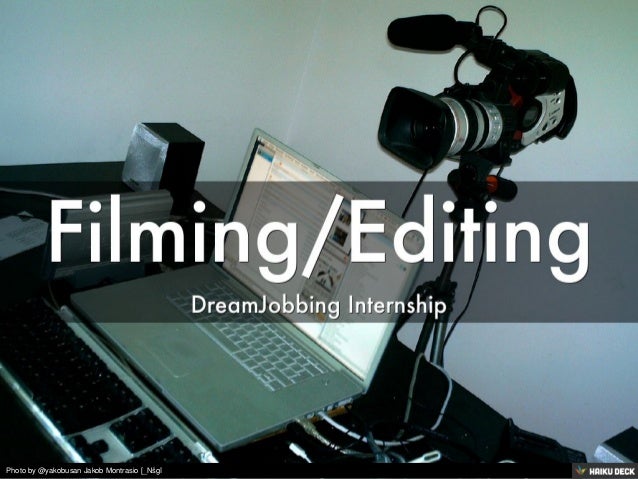
http://image.slidesharecdn.com/a-3-9a359728471d333a2804097d98ff1224fc1ec672-150311004510-conversion-gate01/95/filmingediting-1-638.jpg?cb=1426054505
Revised filming dates

May 30, June 1, 13 filming
June 13, 15 - editing

Showtime June 20

Monday, May 16, 2016

May 16, May 18 (no lesson, exam), May 23, 25, 30, June 1

http://www.iffca.org/images/collapse-image.jpg

1.  Filming, editing
a.  Assign roles to help facilitate this project. (Producer, Director, Screenwriter, Production Designer, Art Director, Costume Designer, Cinematographer, Editor, Actors,Music Supervisor.
b. Set a production schedule.

http://www.centerdigitaled.com/artsandhumanities/The-Roles-of-the-Production-Team.html

Assign your roles today, and above all make sure you stick to the producer's schedule. Each of you will be an actor, but you will need to assign additional roles as well.  Sometimes these roles will be rotating.  Keep track of the roles you are performing as you will need to reflect on this.

Depending on how long the film is going to be, plan that your project time will be between 2 to 3 weeks long. Reserve your last week for your editing and post-production.

2.  Process Journal Entry for each class - (What did you learn today? How did it affect you? How will you use this information? etc.)

3.  Additional separate posts for your Process Journal include but are not limited to:

a.  Create mind map to show how your plot line developed (Show your thinking process)    (C)
b.  What am I doing to include surprises/suspense/tension in our play? (C)
c.  What skills am I practicing and learning as I create this play and how will I use them during my performance? (B, C)
d. How is our play different than anything I have ever seen done by others? (C, D)
e. Our plan for this project unfolded like this. . . (C)
f. One thing that is unique about our play is . . . (C, D)
g. As I reflect on my work I think . . . (D)
h. Script/outline, storyboard(C) 


May 25 - Warm up


Wednesday, May 11, 2016

May 11

1.  Warm Up

Respond to one of the following questions in your notes. 
  • How do you define who you are?
  • Who are you?
  • How does your culture shape your world? Why?
  • With whom do you identify?
  • What do you believe in?
  • What experiences have created your identity?
  • What are your limits?
  • Do you love yourself? Why or why not?
  • What do you struggle with?
  • What are your successes?
  • What self-journeys have you traveled? What did you learn? How did you grow?
  • Are you addicted to anything? How does that control you? Your day? Your choices?
  • What do you love? Whom do you admire? What do you hate?
  • If you could change the world, what would you do?  Why?
  • If you could change your life, what would you change? Why?
  • What holds you back?  Why are you scared?
  • If you could have said it different, what would you have said? Why?
  • How do you define success?
  • How do you fit (exist) in the universe? Country? State? City? Community? School?
  • What is the end? What is your beginning? Why are you waiting?
2. Work in your group to develop your script and ideas.

Sunday, May 8, 2016

May 9

1.  Warm up -  321 Acting Studios Video - 30 seconds to success- Acting Lesson "Breathing Relaxation Technique"


2.  Finish Script Writing

3.  Process Journal Entry

Wednesday, May 4, 2016

May 4

1.  Let's watch this:  The Many Voices of Meryl Street
    While this video focuses on vocal expression, I would like you to also study her body language.
    When you build a character, you need to also think about physical development as well.


 2.  Script writing
      Before you write the script for your "Mexican Soap Opera" pilot,  there are a few things you need  to know and do.
      a.  Brainstorm
      b.  Write a plot idea and the basics of an outline of the script.  Remember that you are writing a tragedy. But what exactly is a tragedy and what should I include in my plot ideas. Click here for information that can help.
            For an example of scrip writing follow this link:http://www.storiestogrowby.com/scripts/contest_body.html
      c.  Develop a relationship map (who's who, and how is everyone related?)

http://www.thefrisky.com/wp-content/uploads/2012/02/24/madmencrop_022412_m-600x450.jpg


4.  Reflect in your Process Journal.  Focus on criterion B and criterion C.

Saturday, April 30, 2016

May 2

1. Role of Greek Chorus in modern theatre.


2.  Warm up:  What are you doing? is good for warming up the brain and body, and practising using the brain and body differently at the same time.


3. Meet with your group members (20 minutes) to make final decisions.

4.  Statement of Artistic Intent   -  Due May 2 (end of class)

Write a 1 page Statement of Artistic Intent that includes the following:

What you are going to do,
Why you are going to do it,
What you want to audience to know or learn,
How you are going to do it.

* You may use the template below to help develop your ideas.  You are NOT limited by this template. It is merely another tool for you to utilize. 

Why are you doing this piece? 
  • What ideas explored throughout the unit and your individual research (including technical theatre) do you intend to further explore in developing your performance concept to a point of realization?

What message/theme do you want to convey when presenting this piece? 

  • What is the main message/theme you wish to communicate in your performance?
  • What lasting impact do you want your performance to have on your audience?
  • Why do you think it is important to communicate this message/theme to your ‘targeted’ audience?


What production elements will you use to present the piece effectively?
  • How do you intend to work with the "production elements" to help communicate your ideas?
What performance elements will you include to effectively communicate your message/theme?
  • How do you intend to work with the "performance elements" to help communicate your ideas?
5.  Process Journal entry.  Focus on criterion B and criterion C.

PS:  themes from Oedipus the King:  http://www.shmoop.com/oedipus-the-king/themes.html
        list of literary themes:  http://homeworktips.about.com/od/writingabookreport/a/themelist.htm

Sunday, April 24, 2016

April 25, 27

April 25 - Happy 25th of April   (National Holiday)


April 27
1.  Story-telling:  Blame.  The moral of the story is that you cannot find a solution to a problem if you are more worried about who is to blame . . .

2.  Get into your group (red, blue, orange, purple)  and brainstorm ideas. Create a basic outline and characters for your soap opera.  Remember that next week you will have to write an Statement of Artist Intention and will need to incorporate some of these ideas.


Modern Family - S 3 E 24 - Baby on Board por modernfamily2016

3.  Create a storyboard for the action of your story. One possible storyboard site is: http://generator.acmi.net.au/storyboard.

4. April 27 Process Journal entry

PS: To read Oedipus Rex online click HERE

Tuesday, April 19, 2016

April 21


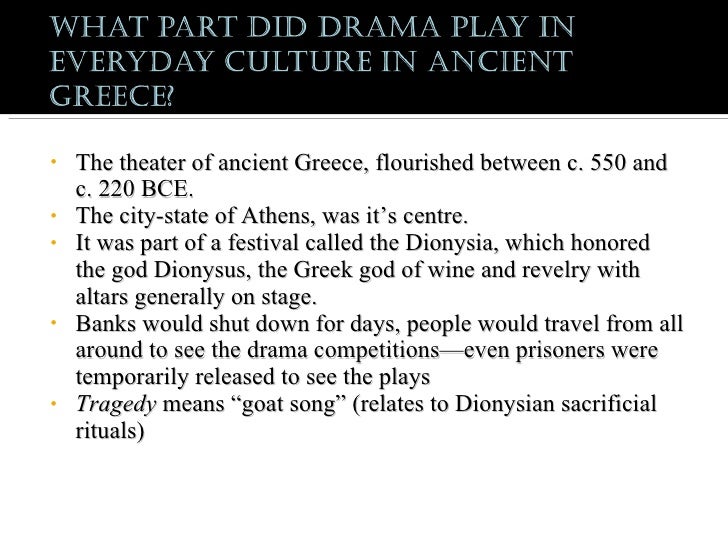
http://image.slidesharecdn.com/cfakepathancientgreektheaterarodcombo-091215212925-phpapp01/95/ancient-greek-theatre-combo-18-728.jpg?cb=1260934269

1.  Get into your group (red, blue, orange, purple)  and brainstorm ideas. Create a basic outline and characters for your soap opera.  Remember that next week you will have to write an Statement of Artist Intention and will need to incorporate some of these ideas.

2.  Create a storyboard for the action of your story. One possible storyboard site is: http://generator.acmi.net.au/storyboard.

3. April 21 Process Journal entry

PS: To read Oedipus Rex online click HERE

Monday, April 18, 2016

April 18


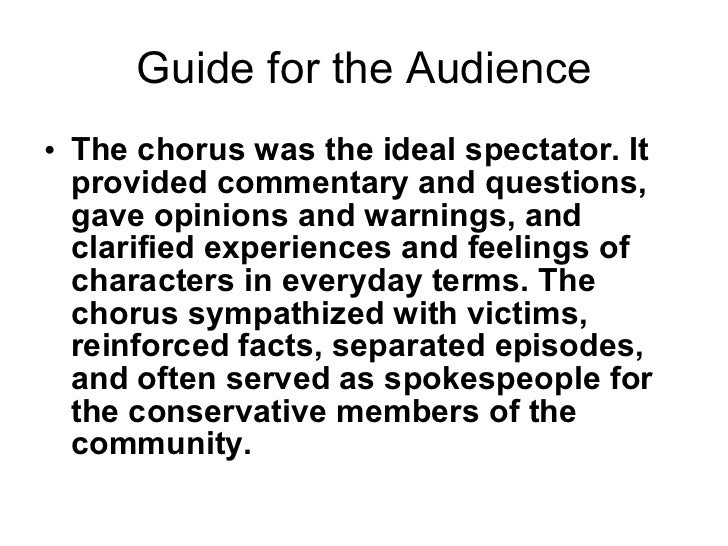
http://image.slidesharecdn.com/greek-theatre-and-the-chorus-1221027581971508-8/95/greek-theatre-and-the-chorus-9-728.jpg?cb=1221035164


1.   Warm Up
Post by Theatre Studies Online at Rose Bruford College

2.  Greek Theatre


3. Sophocles - Oedipus Rex (the short version)


4.  Let's look at an an example of a Greek Tragedy


5.  Process Journal entry


Homework:   Pop Quiz!
http://www.wwnorton.com/college/english/nadrama/content/review/shorthistory/antiquity-18c/greek.aspx 
Cool link that provides lots of information and an online quiz;)

Homework:  Word Search

Sunday, April 10, 2016

April 11, 13


http://www.bupac-online.com/auditions-news-800x450.jpg
1.  The Lisbon Players:Auditions - The Misanthrope by Molière

Saturday 16th April at 17h00
and/or
Tuesday 19th April at 21h00


Nothing to prepare

For more info:  https://www.facebook.com/events/1720911911518711/

2.  You need to have a Term 3 Process Journal.  Once again you will provide a paper version. The Process Journal must be updated regularly (after each class).

3.  Warm up - Vocal Warm-up #4 Articulation from the National Theatre
(you can find more exercises like this online;)


4  Blue group and Purple group - You didn't finish your work from last week. Please submit your diaries and come in for lunch time detention on Tuesday to complete your work.

5. Begin Worksheet 1. Historical Context (Criterion A – Knowing and Understanding – strand i. and ii.)
  • Research Greek Theatre and locate the following information. You may respond in short answer form but explain, be thorough, include detailsRemember to include the question.
  • You need a Works Cited page.

1.  What were the influences that led to the development of Greek Theatre?
2.  What was the main purpose of Greek Theatre?
3.  What were the techniques or conventions used by Greek Theatre and for what purpose?
4.  What is the role of the chorus in Greek Theatre?
5.  Who is known as the first actor? Why?
6.  Who are the 3 most influential Greek playwrights? What important plays did each produce?
7.  Who was the first literary critic? Explain.
8.  Why is Greek Theatre so significant to Western Drama and how has it continued to influence modern works?
9.  What are some modern examples of the Greek chorus?

6.  Process Journal Entry

Homework:  Word Search Puzzle

Tuesday, April 5, 2016

April 6

http://www.fedupusa.org/wp-content/uploads/2013/09/times-up-395x300.jpg

Today you need to finish and print Task 4 - Criterion A and D.

Everything must be properly marked in your Process Journal.

I will mark Task 4 on Thursday evening.

Sunday, April 3, 2016

April 4 (Period 7)

https://therationalcolonel.files.wordpress.com/2014/12/23652_greek_tragedy_mask.jpg
1.  Intro to Greek Tragedy

2.  In groups answer the following and put your answer on this padlet:               (http://padlet.com/rddietrich/khjoqxttjcxo) :

Red - Which of the following was not a type of Greek theater? Explain what Greek theater is.
a. - Mystery
b. - Satyr
c. - Tragedy
d. - Comedy
e. - All of these are types of Greek Theatre

Blue - What is the structure of Greek tragedy? Explain.

Purple - What is the role of the chorus? Explain.
               
Orange - Which of the following lists the Athenian tragedians in chronological order? Why is this important information? Explain.
a. - Sophocles, Aeschylus, Euripides
b. - Aeschylus, Euripides, Sophocles
c. - Euripides, Sophocles, Aeschylus
d. - Aeschylus, Sophocles, Euripides
e. - Euripides, Aeschylus, Sophocles

3. In your process journal answer the following:  My Term 3 expectations.  Explain what you would like to accomplish during Term 3.

April 4

http://www.veronicadearly.com/wp-content/uploads/2014/03/Just-one-more-thing.png

Before we move on:

Period 6

Answer one of these questions:

Conceptual: Can artists shape the world through story telling? How does culture influence the interpretation of the story?
Debatable: Does culture determine aesthetic preference and understanding of the story?

Wednesday, March 9, 2016

March 9, 14

http://www.thelocationguide.com/blog/wp-content/uploads/2012/03/Hawaii-Filming.jpg

Task 3 - Process and Product (Criteria B and C)
The process and product evidence will:
  -  Demonstrate the development of student skills and techniques to realize their artistic intention (Bi),
  -  Explore artistic ideas to realize their artistic intention (Ciii)
  -  Demonstrate the student's ability to perform their own story through art (Drama) (Bii)

March 9, 14 (period 6)
Based on all the knowledge that you have through this unit and your Design unit, please work in your group to film your storytelling video. The group should organize itself into key (rotating) roles within the group:

Director
Camera Person
Technician (lighting, sound, background, etc.)
Film editor
Storyteller (actor/actress)

You will choose and videotape 2 stories this period, and 2 on Monday, period 6.

Submit videos in Google Drive - Year 11videos - Term 2 - Final -


Task 4 - Commentary (Criteria A and D) (audio/visual or written)

The commentary will enable students to:
  -  Use acquired knowledge to purposefully inform their artistic decisions (Aiii) Aiii links knowledge students have gained throughout the unit with their finished product.
  -  Observe, reflect and comment upon the role that arts have played to convey stories in different settings. (Di)
  -  Develop a deeper understanding and appreciation of creative expression as they tell a story of their own and its impact on others. (Dii)

March 14 (period 7), 16
Write a commentary.  Use these Headings:
  -  Understandings gained about story telling through art
  -  Evidence of the use of acquired knowledge to inform the development of my own artwork
  -  Impact of my artistic response on the world around me and my ability to convey my identity and creative expression through my story.
  -  A critique of my story/video including a reflection on the statement of inquiry/inquiry questions.

Sunday, March 6, 2016

March 7

http://www.teacherlocker.com/wp-content/uploads/2014/12/3-classbuilding-group-work.jpg


1.  Warm-up   Slap, Clap, Click, Click  (concentration, rhythm, pacing, working together)

Stand in a circle. The leader begins a 4/4 rhythm, which everybody joins in with:
One – slap both hands on thighs
Two – clap hands together
Three – click fingers of right hand
Four – click fingers of left hand
Once the rhythm is established, go round the circle with everybody saying their own name on the fourth beat, as you click your fingers with your left hand. Try not to speed up.

  • You can play this as a name game – on the fourth beat you say the name of the person next to you.
The next version is a little more challenging. Give a number to everybody around the circle from 1 to however many there are. Get the rhythm going again. One person begins by saying their own number on the third beat and somebody else’s number on the fourth beat. Whoever’s number was called on the fourth beat calls their own number on the third beat of the next bar and somebody else’s number on the fourth. So it could go like this:
Slap – clap – six – ten
Slap – clap – ten– sevenSlap – clap – seven – two

And so on. If and when a mistake is made, stop the game and begin again. Emphasis the steadiness of the beat. You could have a forfeit for whoever makes a mistake – I’ll leave that up to you!

2.  Receive video grades

3.  Focus Group:
    a)Sit with your group.
    b)Each group will research a topic (see below)
    c)Findings and conclusions will be posted on this padlet page: http://padlet.com/wall/d6ta3crg06l3
    d)Present your findings to the class

You have 20 minutes to complete this task
Groups:  Within your group assign these roles: facilitator, recorder, presenter and timekeeper
Red - Félix, Dinis, Saalem, Mariana  -  How to work in a group; Benefits for working in a group on this project.
Blue - Roos, Diogo, João, Katie - From a production standpoint, what constitutes a successful storytelling video? (lighting, sound, etc).  Where would be a good place to film your video here at OIS?
Purple - Rodrigo, Manrico, Marco, Lidia, Matthew - Physical delivery tips
Orange - Marcus, Jed, Tatjana, Max, Matteo - Storytelling techniques (1) writing and 2) presenting) that will help.


Tuesday, March 1, 2016

March 2

http://blog.idonethis.com/wp-content/uploads/2014/09/reflection.png

Today is a day of reflection.  Enjoy the experience . . .

Criterion C, D

1.  These two videos were shown as good examples for you to follow. Watch these 2 videos again:

Niall de Burca - https://www.youtube.com/watch?v=4CWYnpcoA3E
Muireann Murphy - https://www.youtube.com/watch?v=fyjrK_rmSPQ

Write a paragraph (approximately 100 words) to compare and contrast your storytelling video with one of these models.  Look at technical aspects (lighting, costume, props, background, sound, etc).  How does your video measure up?

2.  Now it's time to reflect on your video.
Using the Task Specific Rubric (http://ois-drama11.blogspot.pt/p/storytelling-rubric.html) reflect on your work and give yourself a grade.

Due at the beginning of class March 14.

Saturday, February 27, 2016

February 29

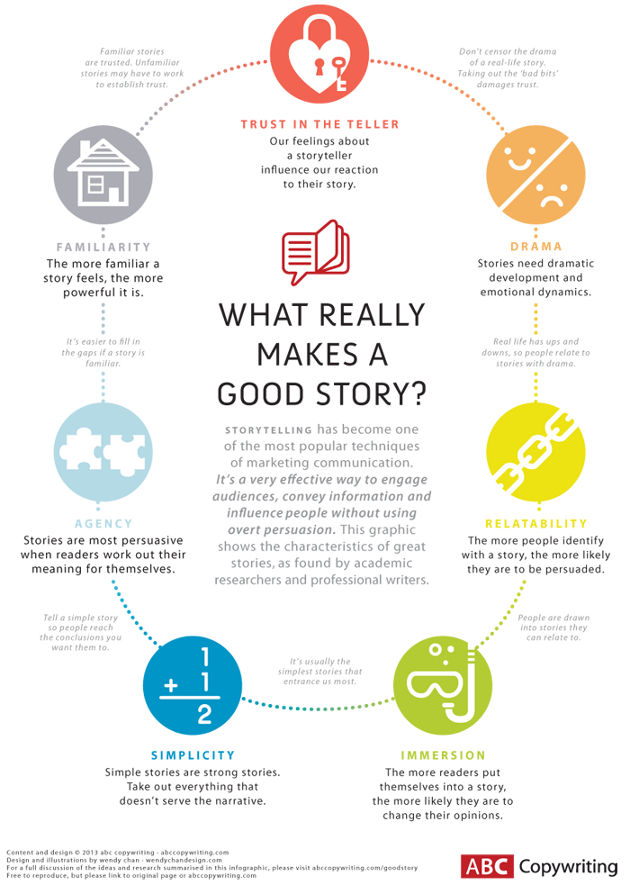
https://seanburrows.com/wp-content/uploads/2015/06/062215_Good-stories-compel-people-to-change-%E2%80%93-from-the-Storytelling-Infographic-by-Fathom-more-here.gif

February 29
Film stories in your groups

I think it would be a good idea to create a YouTube channel to upload our videos. What do you think?

Please upload your video to Google Drive: Year 11 Videos, Term 2.


Wednesday, February 24, 2016

February 24


http://www.creativitypost.com/images/uploads/activism/left-brain-right-brain-creativity-400x294.jpg
Process Journal work will be done as homework as you have not been properly maintaining your Process Journals.

Homework: Criterion B, Criterion C, Criterion D
Each task on a separate sheet of A4 paper.  Label your work according to the Criterion(s) that it addresses. Give complete, detailed, thoughtful responses which show your learning.

1.  Create mind map of your story choice (Show your thinking process)    (C)
2.  What am I doing to include surprises/suspense/tension in my story? (C)
3.  What skills am I practicing and learning as I create this story? (B, C)
4. How is my story different than anything I have ever seen done by others? (C, D)
5. My plan for this project unfolded like this. . . (C)
6. One thing that is unique about my story is . . . (C, D)
7. This story is an expression of my culture because . . . (C, D)
8. As I reflect on my work I think . . . (D)
9. Story (C)

Performance date:  Monday February 29

Sunday, February 21, 2016

February 22


http://ecx.images-amazon.com/images/I/51aYHODqbUL._SX331_BO1,204,203,200_.jpg

 1.  Warm-up   Slap, Clap, Click, Click  (concentration, rhythm, pacing, working together)

Stand in a circle. The leader begins a 4/4 rhythm, which everybody joins in with:
One – slap both hands on thighs
Two – clap hands together
Three – click fingers of right hand
Four – click fingers of left hand
Once the rhythm is established, go round the circle with everybody saying their own name on the fourth beat, as you click your fingers with your left hand. Try not to speed up.
  • You can play this as a name game – on the fourth beat you say the name of the person next to you.
The next version is a little more challenging. Give a number to everybody around the circle from 1 to however many there are. Get the rhythm going again. One person begins by saying their own number on the third beat and somebody else’s number on the fourth beat. Whoever’s number was called on the fourth beat calls their own number on the third beat of the next bar and somebody else’s number on the fourth. So it could go like this:
Slap – clap – six – ten
Slap – clap – ten– sevenSlap – clap – seven – two

And so on. If and when a mistake is made, stop the game and begin again. Emphasise the steadiness of the beat. You could have a forfeit for whoever makes a mistake – I’ll leave that up to you!


https://geibsummer2011.wikispaces.com/file/view/image-text.png/242153627/880x674/image-text.png

2. Compare/Contrast interactive exercise:
http://www.readwritethink.org/classroom-resources/student-interactives/compare-contrast-30066.html

3.  Task 1 (again)

Wednesday, February 17, 2016

Plan B

http://www.boomerangkidsfranchise.com/wp-content/uploads/2013/10/plan-b.jpg
Summative assessment tasks, including assessment criteria

An individual presentation of research using concepts and subject-specific terminology of the:
  • Work of a master artist(s)/theorist(s)/practitioner(s) and the way they tell a story through art.
  • Critical analysis (compare and contrast) of two works from different artists.
  • Relationship between the artworks and their context (Context: facts or circumstances that surround an event or situation.)
 ______________________________________________________________________
You are NOT limited to this structure and the following information, it is merely a beginning . . .

Task 1 - Presentation      Maximum 650 Words      
Must use subject-specific language throughout this work

Structure

1) Introduction - What is storytelling?  brief introduction (3 sentences maximum)

2) Storytelling in 2 different cultures   (various European, African, North American, Middle American, South American, Australian cultures.  Could include Japan, Russia, Native American, etc.)
        Choose 2 different cultures - analyze them

3) Choose 1 storyteller from each of the 2 cultures above.
              Include a brief biography on each   (3 sentences max.) Include how their culture is driving the stories they write and the stories they tell.
             Analyze 1 story from each of the storytellers (include a brief summary and url if possible)

4) Critically analyze (compare AND contrast) these 2 stories  (How are they the same?  How are they different?  Look at content. Look at the structure (Freytag's pyramid), language, message, method of communication).

5) respond to this question:  How does culture influence storytellers and stories?

If you have any questions please send an email to:  ramona.dietrich@oeirasinternationalschool.com

You may bring a draft to class on Monday and I will give you feedback.


Tuesday, February 16, 2016

February 17

http://cdn.phys.org/newman/gfx/news/hires/2016/569f684986095.jpg

Phylogenetic analyses suggests fairy tales are much older than thought - click to read about fairy tales http://phys.org/news/2016-01-phylogenetic-analyses-fairy-tales-older.html

Fairy tale origins thousands of years old, researchers say: http://www.bbc.com/news/uk-35358487

1.  Grade yourself.  Using the rubric supplied grade your concept map.

Discuss findings 

2.  Plan B 

Thursday, February 11, 2016

February 15

https://i.ytimg.com/vi/fWuB3ysTae8/hqdefault.jpg


 1.  Warm-up -   Directing game,
      True Stories  -   In your groups, students take turns telling true stories about something that happened to them (the time you were most scared; a time when you were really proud of yourself; the best day of your life; etc.) Other group members listen intently and offer feedback (Criterion D - document this feedback). Groups vote on the most interesting story.

2.  Criterion C
Students will create a Statement of Artistic Intention.   It should include but is not limited to the following: what you are going to do, why you are going to do it, and how you will do it. Write well defined paragraphs which include substance and detail outlining the following:

What you are going to do (purpose)
  include:
    the topic you are studying this term in Drama class
    brief background of storytelling
    what your task is
    brief summary of your story 

Why you are going to do it (message)
     what is the main message/theme you wish to communicate in your story?
     who is your audience and what lasting impact do you want this story to have on your audience?
     why do you think it is important to communicate this message/theme to your "targeted" audience?

How you will do it (production and performance elements
     how will you bring this story to life?  (include costume, props, and acting techniques that you will use)

3.  Journal Writing - (What did you learn today? How did it affect you? How will you use this information? etc.)

Homework:  come to class with an outline for your story written down. 

Wednesday, February 10, 2016

Storytelling

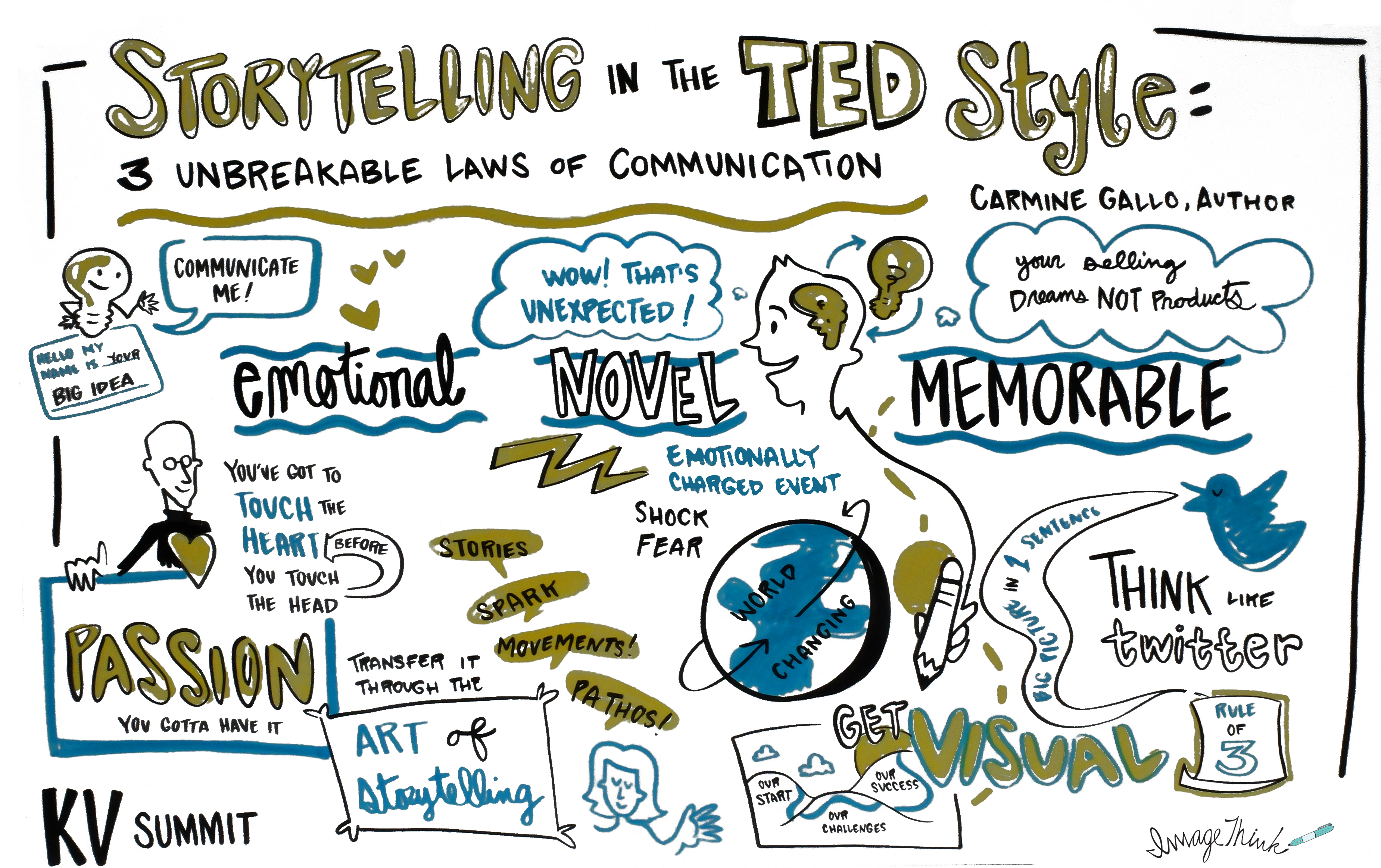
http://www.khoslaventures.com/wp-content/uploads/kv_summit_unbreakable_laws_of_storytelling_carmine_gallo.jpg

13 Great Storytelling Techniques: How to construct a winning story
https://blog.udemy.com/storytelling-techniques/

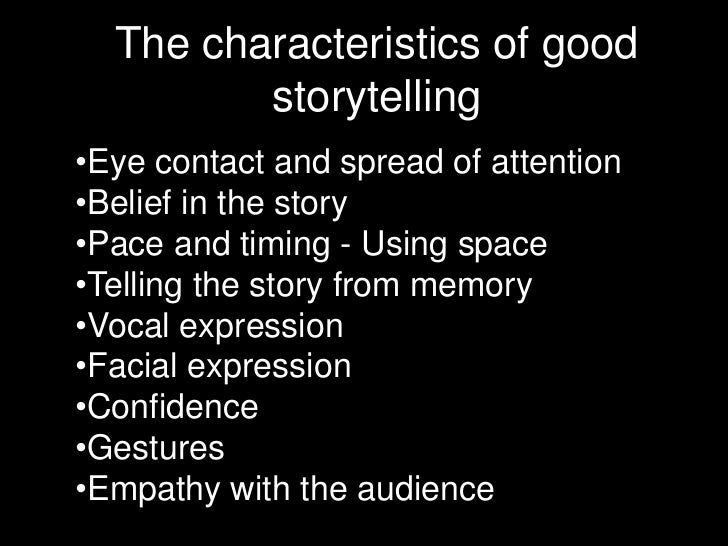
http://image.slidesharecdn.com/goodstoryteller1-111122050919-phpapp01/95/what-makes-a-good-storyteller-4-728.jpg?cb=1321939298

http://www.thestorytellers.it/wp-content/uploads/2013/09/storytelling.jpg
Story Starters:
http://www.literacyshed.com/the-story-starter-shed.html


Seven Steps to the Perfect Story: 
http://artiststoolbox.tumblr.com/post/65479011545/theinformationdump-seven-steps-to-the-perfect 

https://blogger.googleusercontent.com/img/b/R29vZ2xl/AVvXsEhtcYJc29N9NldFuyltNocvcJg1jSCgD5rfzPsxv1Mvthznwfa5tNzOXdfuZFqArMehQufOZKp2e_RupFXHQRKYqyCM8EetrBTvnPVm6IcYmHcxszbZ_A2mFRb5_LFVUhUPf-bMf1V8JBWd/s1600/steps+of+storytelling.jpg

Monday, February 1, 2016

Ideas that might be useful


Other things you could include:

Borders (with links, questions and answers, vocab, etc)
Different kinds of stories (fables, myths, legends, etc)
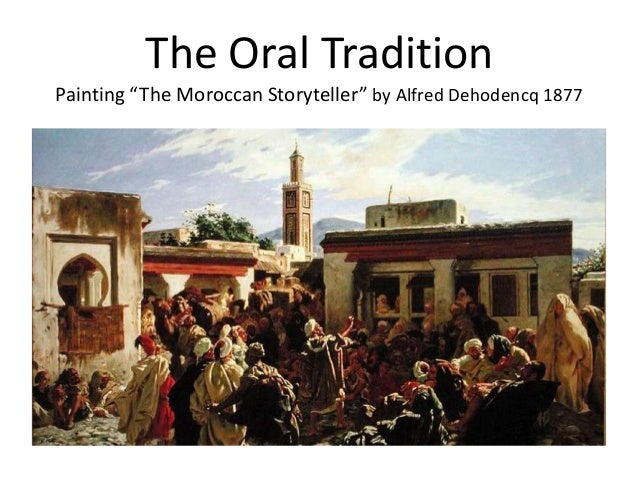
Story telling traditions

Sunday, January 31, 2016

February 1, 3

https://ksr-ugc.imgix.net/projects/568110/photo-original.jpg?v=1397821858&w=1536&h=1152&fit=crop&auto=format&q=92&s=bd398c56273c2d9f25cfd871eae1d1a9
1. Warm-up   -   Circle Story   -   Imagination, Concentration, Spontaneity
A group creating and telling a story together, one word or sentence at a time.

How Do I Play It?
Start in a Drama circle.
Students take it turn to say either a sentence or word building up a story around the circle.
You can use sentence starters or words to change the story e.g. "fortunately" and "unfortunately" alternately as the first word of the sentence.
You can also experiment with story conventions e.g. once upon a time, the official time of death had been 6.15 pm etc.

2.   Assessment Task 1 - Presentation 
      Finish your Storytelling graphic
         - Be sure to have a clear learning path that anyone can understand
         - Be sure to individualize your graphic

3.  Process Journal Entry

Homework:  Storytellers created by Joey Graceffa

a) Watch Episode1and write a Criterion D entry in your Process Journal.
b) Read Joey Graceffa's biography (https://en.wikipedia.org/wiki/Joey_Graceffa)

Thursday, January 21, 2016

January 25, 27


1.  Warm-up   - Voice and diction exercise - tongue twister (builds confidence)
     The big black bug bit the big black bear.


Now try these:

For more tongue twisters: http://americanfolklore.net/folklore/2010/07/funny_tongue_twisters.html,
http://www.uebersetzung.at/twister/en.htm

2.  Criterion D: Responding
Students respond to their world, to their own art and to the art of others.
Students must make connections and transfer learning to new settings.
 Through reflecting on their artistic intention and the impact of their work
on an audience and on themselves, students become more aware of their
 own artistic development and the role that arts play in their lives and in the
world. Students learn that the arts may initiate as well as respond
 to change.
What does the IB have to say about this? Let's watch and discuss.


3. Infographics -Let's look at how we can organize all this info.
    a). Principles of Effective Infographics - http://design.tutsplus.com/courses/effective-infographic-design/lessons/principles-of-effective-infographic-design
    b) Sites that can help give ideas.  Pictochart - http://piktochart.com/ , Easelly - http://www.easel.ly/

4.  Process Journal Entry

Monday, January 11, 2016

January 11, 13, 18, 20

http://image.slidesharecdn.com/thefutureofstorytelling-transmediatoedipping2013-131101014402-phpapp01/95/the-future-of-story-telling-transmedia-toe-dipping-2013-2-638.jpg?cb=1407875198
January 11, 13

1. Make front cover for Process Journal (print outside and bring to the next lesson),
2. Movie
     a. Discussion: Stand By Me
     b. Criterion Diii - respond to worksheet (link on blog)
3.  Conduct research
      a. define subject specific vocabulary:  establishing contact with audience, rhythm, tempo, climax, structure, keeping the audience attention, eye contact with audience, dramatic pause, how to build suspense, syntax, Freytag's pyramid (structure of a story), pacing, plot, gesture (https://quizlet.com/6580711/storytelling-vocabulary-flash-cards/)
      b. What is story telling? Why tell stories? How does culture influence storytelling? What are some skills and techniques I can use to tell my story?
      c. Research contemporary story tellers. Look at the work of a story teller and the way he/she tells a story. Include a short biography.
      d. Critical Analysis (compare and contrast): 2 different oral traditions (for example Native American and African), AND 2 different storytellers.
   

You NEED a Works Cited page. 

Due Date - At the beginning of class on Monday, January 25.

Irish story telling and Irish story tellers:
Niall de Burca - https://www.youtube.com/watch?v=4CWYnpcoA3E
Muireann Murphy - https://www.youtube.com/watch?v=fyjrK_rmSPQ

José Saramago - Baltasar and Blimunda http://www.amazon.com/Baltasar-Blimunda-Panther-Jose-Saramago-ebook/dp/B00DIK7SFO/ref=sr_1_1?ie=UTF8&qid=1452695163&sr=8-1&keywords=kindle+books+-+baltasar+and+blimunda#reader_B00DIK7SFO

Some links to help:

www.storynet.org   (Katie's suggestion)

Links suggested by the MYP (IB):
Society for Storytelling      http://www.sfs.org.uk
Stories in a nutshell      http://www.storyarts.org/library/nutshell/index.html
Stories in the bag    https://www.youtube.com/watch?v=FqDtbjVLnFM
                                http://www.storiesinabag.com.ar
Kevin Kling, contemporaty storyteller    http://www.kevinkling.com

Even more links:
ECHO  - http://www.echospace.org/articles/279/sections/683.html
Native Storytellers connect the past and the future: http://cojmc.unl.edu/nativedaughters/storytellers/native-storytellers-connect-the-past-and-the-future
Storytelling day: http://www.storytellingday.net/history-of-storytelling-how-did-storytelling.html

http://www.storytellingday.net/history-of-storytelling-how-did-storytelling.html


Sunday, January 3, 2016

January 4, 6

https://s-media-cache-ak0.pinimg.com/736x/b1/d9/6c/b1d96cbd1d516c2e19374fce13773169.jpg
Welcome to Term 2 - This term we are going to be looking at storytelling.

To open our lesson, let's watch a great story . . .

Stand By Me


Stand By Me

Questions:  https://drive.google.com/file/d/0B5HvRJKjycg1VlRZZ0loS2QyRGs/view?usp=sharing

Study guide:   http://www.filmeducation.org/pdf/film/StandByMe.pdf

Monday, December 14, 2015

December 14, 16


                                                                     Dead Poets Society
December 14
1.  Find your own walk . . .

2. Prepare you scene.

    Delivery date:  December 14, 15

3. Process Journal Reflection

December 16

1. Dear Daddy

2. Scene Delivery

3. Process Journal Reflection

Thursday, December 3, 2015

December 7, 9

 December 7

1.  Feedback  -  What is the purpose? How can we help someone else achieve their goals?
     You give feedback, coach, share info and help each other with all things tech. Can we maintain
      that same openness with other subjects?

2.  Choose a partner and a script.  Prepare you scene.  Delivery date:  December 14

December 9

Production dress rehearsal